Table of Contents
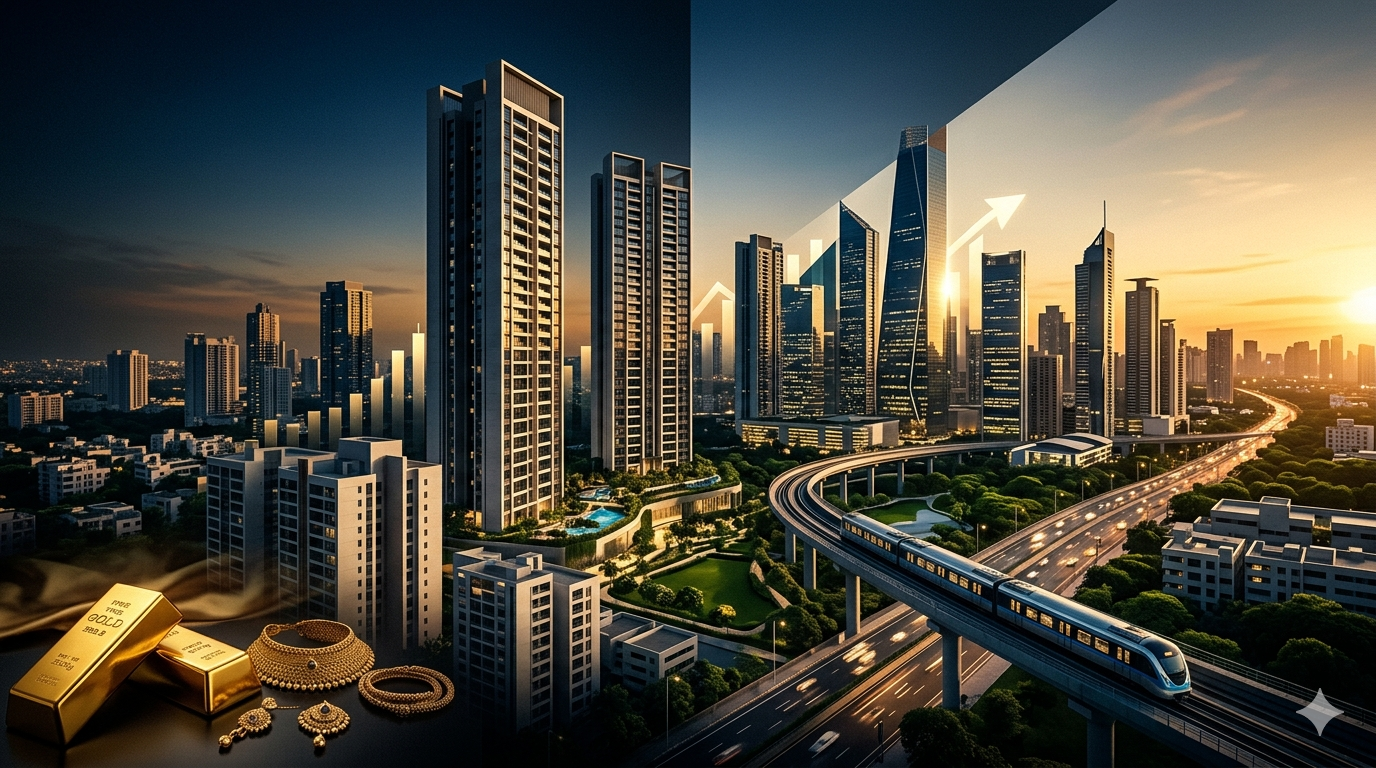
With rising oil prices, pressure on forex reserves, and changing investment trends, many Indian investors are rethinking traditional asset choices. As urban infrastructure expands and demand for modern housing grows, real estate is emerging as a strong long-term asset for wealth creation, stability, and lifestyle growth.
India’s economic landscape is witnessing an interesting shift in 2026. Rising crude oil prices, global geopolitical tensions, and increasing pressure on foreign exchange reserves have sparked nationwide discussions around spending patterns, investments, and long-term asset creation.
During a public rally in Hyderabad on May 10, Prime Minister Narendra Modi urged citizens to reduce non-essential gold purchases for a period of time and adopt more economically responsible spending habits amid global uncertainty. The statement has drawn attention not only from economists and policymakers but also from investors looking to understand where capital may flow next.
Rising Pressure on Imports and Forex Reserves
India is one of the world’s largest importers of both crude oil and gold. When international oil prices rise sharply, the country’s import bill increases significantly, creating pressure on the rupee and foreign exchange reserves.
Gold imports also contribute to dollar outflows from the economy. In periods of global uncertainty, governments often encourage more productive domestic investments that can support long-term economic growth and infrastructure development.
This has naturally led many investors to re-evaluate traditional asset allocation strategies.
Why Real Estate Is Gaining Investor Attention
Real estate has historically been viewed as a long-term wealth creation asset in India. While every investment carries risk, property continues to attract attention because of several structural factors shaping the Indian economy.
1. Growing Urban Infrastructure
Large-scale infrastructure projects, expressways, metro connectivity, smart-city initiatives, and industrial corridors are transforming several emerging regions across India. Improved connectivity often increases the attractiveness of residential and commercial developments.
2. Demand for Larger & Functional Homes
Hybrid working models and flexible work environments have changed buyer preferences in recent years. Homebuyers are increasingly prioritizing:
Larger living spaces
Dedicated work areas
Better amenities
Integrated communities
Improved lifestyle infrastructure
This shift has created sustained demand in many residential markets.
3. Real Estate as a Long-Term Asset
Unlike physical gold, real estate can potentially generate:
Rental income
Long-term capital appreciation
Utility value
Portfolio diversification
Many investors consider quality property assets as part of a balanced long-term investment strategy.
4. India’s Expanding Middle Class
India’s rising middle-income population, increasing urbanization, and growing aspirations for home ownership continue to support long-term housing demand across multiple segments.
A Market Driven by Long-Term Fundamentals
While short-term market fluctuations are always possible, many industry experts believe that well-located real estate projects with strong infrastructure support may continue to see healthy demand over the coming years.
As investors diversify beyond traditional assets, sectors connected to real economic growth and urban development are expected to remain in focus.
The Importance of Choosing the Right Opportunity
In any market cycle, location, developer credibility, infrastructure growth, and long-term usability remain key factors in real estate investment decisions.
At Matrix Acres, we believe real estate is not just about owning property - it is about building a better lifestyle, securing long-term value, and participating in India’s evolving growth story.
Our commitment is centered around delivering thoughtfully planned opportunities that align with modern living, future infrastructure growth, and customer aspirations.
As India continues to evolve economically and structurally, informed and responsible investing will remain the key to long-term wealth creation.
During a public rally in Hyderabad on May 10, Prime Minister Narendra Modi urged citizens to reduce non-essential gold purchases for a period of time and adopt more economically responsible spending habits amid global uncertainty. The statement has drawn attention not only from economists and policymakers but also from investors looking to understand where capital may flow next.
Rising Pressure on Imports and Forex Reserves
India is one of the world’s largest importers of both crude oil and gold. When international oil prices rise sharply, the country’s import bill increases significantly, creating pressure on the rupee and foreign exchange reserves.
Gold imports also contribute to dollar outflows from the economy. In periods of global uncertainty, governments often encourage more productive domestic investments that can support long-term economic growth and infrastructure development.
This has naturally led many investors to re-evaluate traditional asset allocation strategies.
Why Real Estate Is Gaining Investor Attention
Real estate has historically been viewed as a long-term wealth creation asset in India. While every investment carries risk, property continues to attract attention because of several structural factors shaping the Indian economy.
1. Growing Urban Infrastructure
Large-scale infrastructure projects, expressways, metro connectivity, smart-city initiatives, and industrial corridors are transforming several emerging regions across India. Improved connectivity often increases the attractiveness of residential and commercial developments.
2. Demand for Larger & Functional Homes
Hybrid working models and flexible work environments have changed buyer preferences in recent years. Homebuyers are increasingly prioritizing:
Larger living spaces
Dedicated work areas
Better amenities
Integrated communities
Improved lifestyle infrastructure
This shift has created sustained demand in many residential markets.
3. Real Estate as a Long-Term Asset
Unlike physical gold, real estate can potentially generate:
Rental income
Long-term capital appreciation
Utility value
Portfolio diversification
Many investors consider quality property assets as part of a balanced long-term investment strategy.
4. India’s Expanding Middle Class
India’s rising middle-income population, increasing urbanization, and growing aspirations for home ownership continue to support long-term housing demand across multiple segments.
A Market Driven by Long-Term Fundamentals
While short-term market fluctuations are always possible, many industry experts believe that well-located real estate projects with strong infrastructure support may continue to see healthy demand over the coming years.
As investors diversify beyond traditional assets, sectors connected to real economic growth and urban development are expected to remain in focus.
The Importance of Choosing the Right Opportunity
In any market cycle, location, developer credibility, infrastructure growth, and long-term usability remain key factors in real estate investment decisions.
At Matrix Acres, we believe real estate is not just about owning property - it is about building a better lifestyle, securing long-term value, and participating in India’s evolving growth story.
Our commitment is centered around delivering thoughtfully planned opportunities that align with modern living, future infrastructure growth, and customer aspirations.
As India continues to evolve economically and structurally, informed and responsible investing will remain the key to long-term wealth creation.